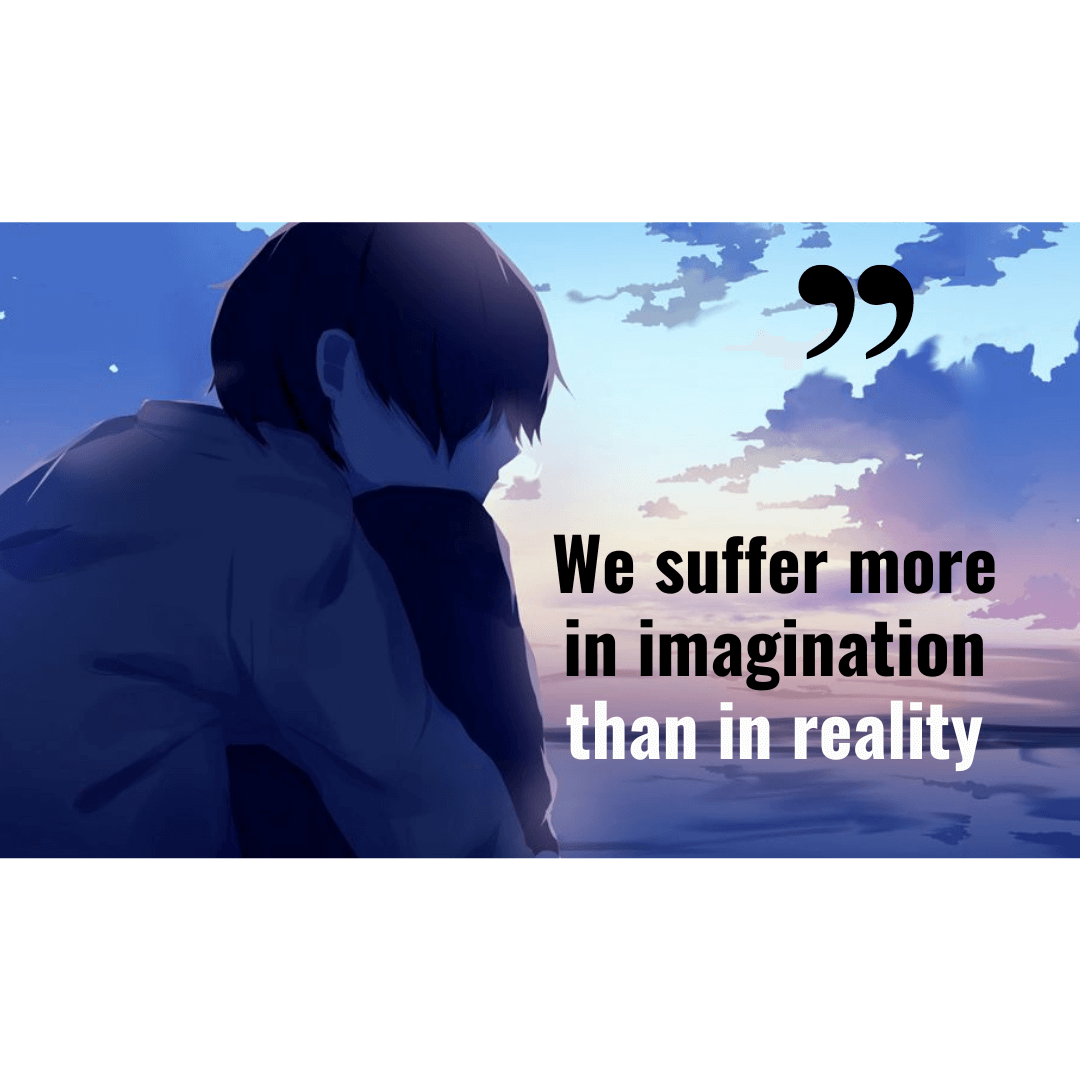
We suffer more often in imagination than in reality
The statement "We suffer more often in imagination than in reality" reflects the idea that our minds often amplify our fears and worries about future events, leading to unnecessary stress and anxiety. In many cases, the actual experience or outcome of a situation is not as bad as we had imagined it to be. "There are more things likely to scare us than there are to actually hurt us"
This concept is attributed to the Stoic philosopher Seneca, who wrote, "There are more things, Lucilius, that frighten us than injure us, and we suffer more in imagination than in reality."
A Brief Story
Once upon a time in a small, peaceful village nestled in a valley, there lived a farmer named Samuel. Samuel was known throughout the village for his habit of worrying excessively about the future. He was constantly anxious about things that might happen, and his mind often painted the worst possible scenarios. One day, a drought descended upon the village, and the crops began to wither. The entire community was concerned about their livelihoods, but Samuel's anxiety reached new heights. He couldn't sleep, imagining his family starving, losing their home, and the village falling into ruin. As the days passed, Samuel's anxiety only intensified. He couldn't eat, and he spent every waking moment fretting about the dire future he saw ahead. His friends and neighbors tried to reassure him, but he couldn't shake his overwhelming fear. One evening, while Samuel was deep in thought about the impending disaster, a wise old man from the village approached him. The old man had lived through many hardships and had learned to keep a calm perspective on life's challenges. The wise man said, "Samuel, I understand your worries, but I've noticed something important in life. We often suffer more in our imagination than in reality. Yes, times are tough right now, but worrying endlessly won't make it rain or save our crops. It's essential to do what we can and accept what we cannot change." Samuel was initially skeptical, but he decided to take the old man's advice to heart. He started focusing on practical solutions, like conserving water and sharing resources with his neighbors. He also made an effort to appreciate the simple joys of life, like the beauty of a sunset or the laughter of his children. As the days turned into weeks, the village did indeed face hardships. The drought was harsh, and the crops suffered. However, they managed to get by with the support of their close-knit community. Then, one day, the long-awaited rain finally arrived. It was a glorious downpour that rejuvenated the parched land. The crops began to flourish, and the village's worries were washed away. Samuel realized that all his sleepless nights and anxiety had been for naught. The suffering he had experienced was primarily in his imagination. While the situation was undoubtedly difficult, it wasn't as catastrophic as he had feared. From that day forward, Samuel learned the invaluable lesson that excessive worry and fear of the future can create suffering far greater than the reality of the challenges we face. He became a more resilient and content person, guided by the wisdom that it's better to focus on the present and take action when necessary, rather than letting the imagination run wild with unnecessary suffering.
Conclusion
The key takeaway from this statement is that it's natural for humans to anticipate and sometimes exaggerate the negative aspects of a situation. By recognizing this tendency, we can work on managing our thoughts and emotions, practicing mindfulness, and gaining a more realistic perspective on the challenges we face. This can help reduce unnecessary suffering and improve our overall well-being.